Apparel Manufacturing & SourcingTKT-0B8F
Fire engulfs Gazipur garment factory as Bangladesh safety scrutiny returns
A fire has engulfed a garment factory in Gazipur, Bangladesh's largest apparel district, per The Financial Express. With no buyer or supplier disclosure yet issued, sourcing teams face a documentation task before any sourcing shift.
- Cut
- October 10, 2026
- Sew
- 3 min
- Ticket
- TKT-0B8F
Construction
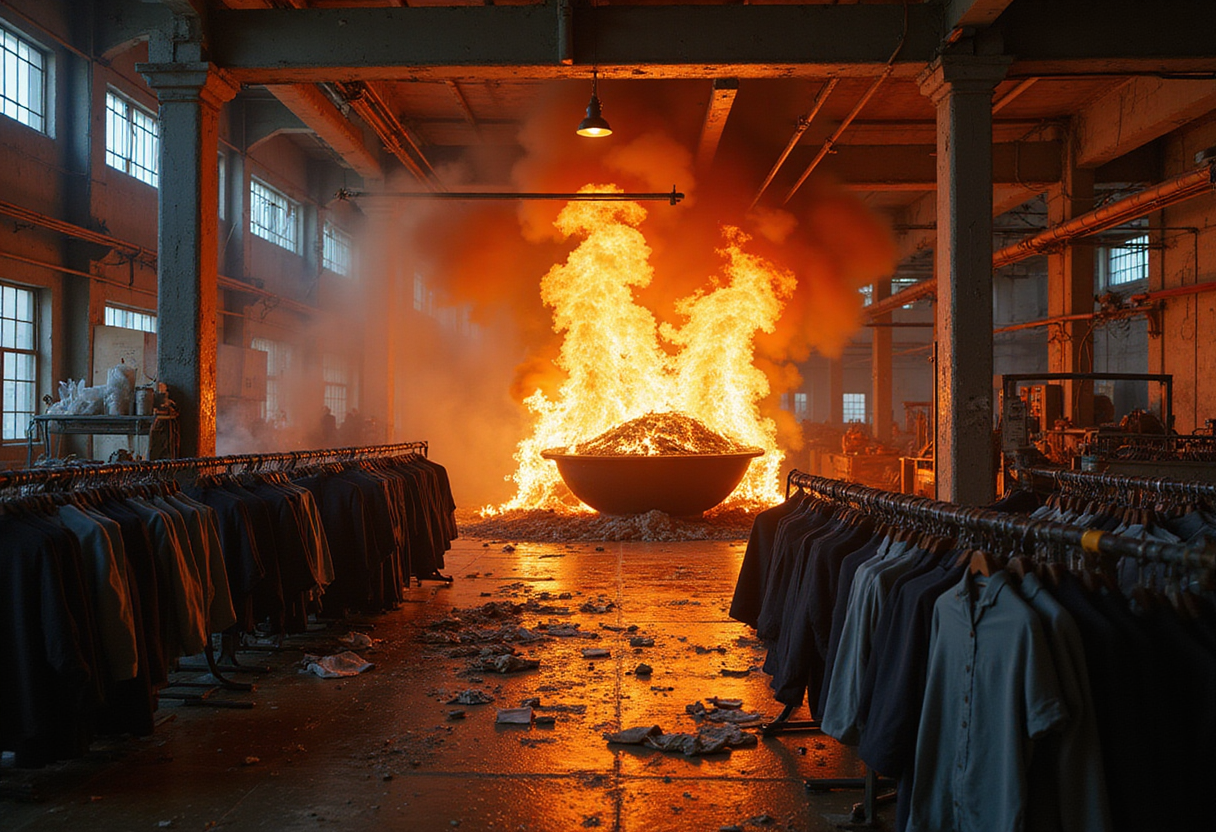
A fire engulfed a garment factory in Gazipur district, Bangladesh, per The Financial Express.
No casualty count, factory ownership line or ignition cause was included in the published report.
Bangladesh exported $38.95 billion of ready-made garments in FY2023-24, per previously published Export Promotion Bureau data.
Gazipur concentrates knit, sweater and woven finishing units supplying Inditex, H&M, C&A and Primark among others.
No buyer, BGMEA or factory-owner statement was attached to the published report at the time of writing.
A fire has engulfed a garment factory in Gazipur, the industrial district that anchors a large share of Bangladesh's woven and knit capacity for European and North American buyers, according to a report by The Financial Express. Details of the blaze remain limited in the public reporting, with the outlet providing no casualty count, no factory ownership line and no cause of ignition at the time of writing.
What is known so far
- The fire occurred at a garment manufacturing facility in Gazipur district.
- The Financial Express carried the report; no government, BGMEA or factory-owner statement is included in the published item.
- No buyer name, no shipment disruption figure and no insurance loss estimate appear in the source.
Until a buyer or supplier disclosure lands, the commercial impact can only be sketched at the supply-chain tier it concerns: tier-2 cut-make-trim operations feeding tier-1 garment exporters serving EU and US apparel programmes. Buyers running multi-tier traceability under the EU Corporate Sustainability Due Diligence Directive (CSDDD) and the German Supply Chain Due Diligence Act (LkSG) will need to map the affected plant within their disclosed supplier lists before any incident report can be reconciled with statutory obligations.
Why does Gazipur matter to global buyers?
Gazipur sits on the eastern edge of the Dhaka metropolitan area and concentrates a dense cluster of knit, sweater and woven finishing units. The district hosts factories supplying Inditex, H&M, C&A, Primark, Kontoor and a long tail of mid-market European retailers, alongside Korean and Japanese trading-company volume. Any incident in Gazipur therefore reaches the sourcing desks of brands whose tier-2 cut, sew and finishing capacity runs through the cluster.
Bangladesh exported $38.95 billion of ready-made garments in the 2023-24 fiscal year, according to data the country's Export Promotion Bureau has previously published, with knitwear and woven product each contributing roughly half of that total. A single factory event rarely shifts national export aggregates; it does, however, test the incident-response runbooks that EU buyers activated after the 2012 Tazreen Fashions fire and the 2013 Rana Plaza collapse.
What does the reporting gap force on sourcing teams?
Sourcing managers should treat the unconfirmed detail as a compliance trigger rather than a sourcing decision. The first action is supplier mapping: confirming whether the affected unit appears on the brand's tier-1 or tier-2 disclosure list. The second is incident-route correspondence: writing to the named factory group, the BGMEA and the Accord or RMG Sustainability Council (RSC) office covering the zone to obtain a written incident summary, casualty report and remediation timeline.
Trade-press reporting on Gazipur fires has, in past years, surfaced three compliance items buyers must trace to a standard: the Accord on Fire and Building Safety in Bangladesh (now RSC) inspection record; the buyers' own code-of-conduct incident log; and any CSDDD or LkSG reporting obligation triggered if the factory sits inside the disclosed supplier list. Without a confirmed factory name, none of those links can be closed.
What sourcing decision does this news force?
For buyers with active orders routed through Gazipur finishing units, the immediate decision is a shipment-status check, not a country-exit call. Orders already in production should be traced lot by lot to identify any output from the affected facility; orders not yet started can be re-routed within Bangladesh or shifted to alternative finishing hubs in Narayanganj or Savar if the buyer's dual-sourcing approval permits it. Country-level diversification decisions belong to a longer-cycle review, not to an unverified single-factory incident.
Until The Financial Express report is supplemented by an owner statement, a fire service origin finding, or a BGMEA incident note, the sourcing desk's task is documentation, not repricing.
via Google News: Garment factories (Source)
More from Grace Kim
Show full bio
Correspondent covering regulation, policy and their impact on Light industry and softgoods manufacturing at Softgoods Report.
251 articles