Textile Mills & FibersTKT-F0F8
Italian Textile Machinery Makers Target Taiwan Market
Italian textile machinery makers are targeting Taiwan, Textile Excellence reports — a retooling signal for mills deep in the synthetic fabric supply chain. Buyers should verify supplier investment plans now.
- Cut
- October 9, 2026
- Sew
- 2 min
- Ticket
- TKT-F0F8
Construction
Italian textile machinery manufacturers are pursuing the Taiwan market, Textile Excellence reports.
No order values, named buyers or exhibitor counts were disclosed in the report.
Taiwanese mills supply functional synthetics for activewear and outdoor programmes.
Equipment upgrades typically affect mill capability claims within one to two production seasons.
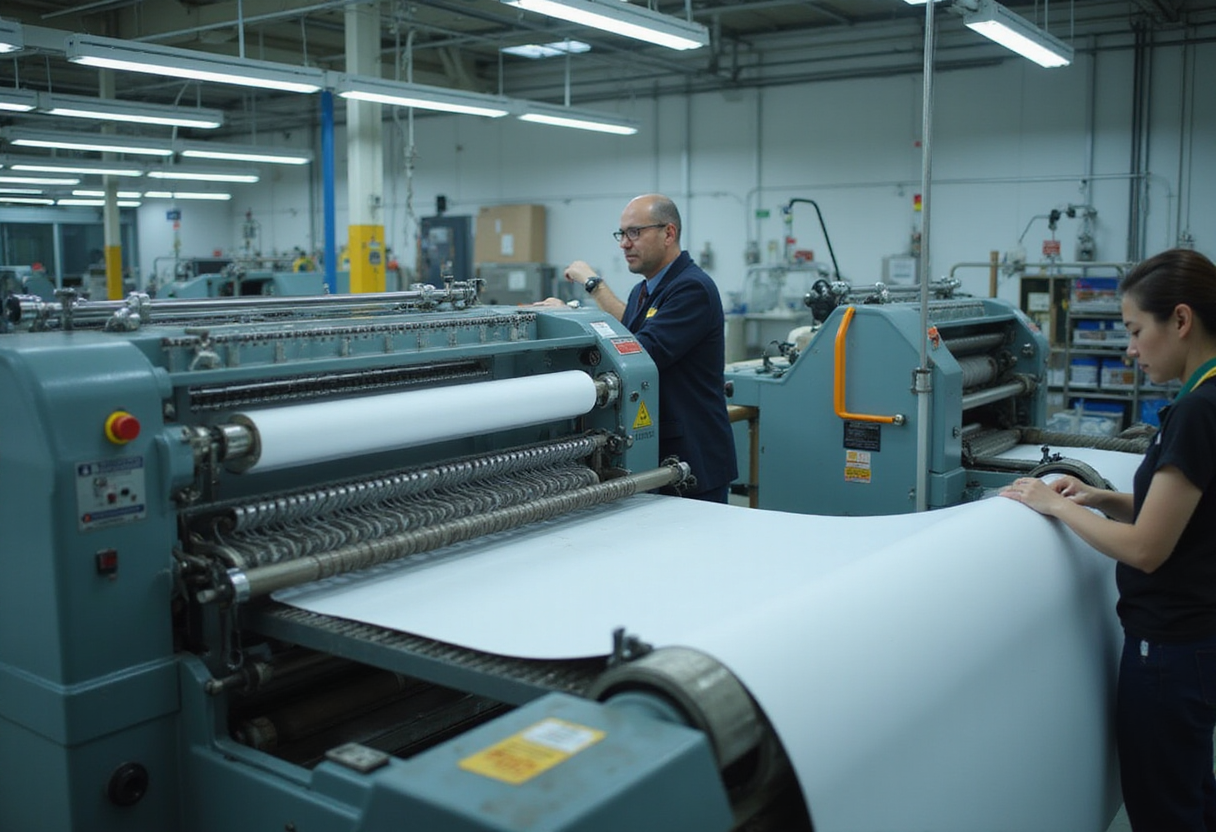
Italy's textile machinery manufacturers are heading to Taiwan, according to a report by Textile Excellence, signalling a fresh push by one of the world's largest equipment-supplying nations into a key Asian textile production hub.
The development matters for softgoods sourcing teams on two counts. First, Italian suppliers — spinning, weaving, knitting, finishing and dyeing equipment among them — set the technical benchmark that many Asian mills advertise when courting European and US brands. Second, Taiwan's mills sit deep in the synthetic-fabric supply chain, supplying performance and functional textiles to sportswear and outdoor buyers, so any retooling there eventually shows up in fabric lead times, capability claims and price quotes.
Why does a machinery push matter to sourcing desks?
When equipment vendors concentrate sales effort on a market, capacity upgrades tend to follow within one to two production seasons. Buyers specifying technical fabrics from Taiwanese mills should expect:
- New or upgraded machine parks capable of finer gauges, better colour consistency or lower-water finishing;
- Updated compliance documentation from mills investing in newer, more energy-efficient Italian lines;
- Possible minimum-order and lead-time shifts as mills balance installation downtime against order books.
The Textile Excellence report confirms the direction of travel — Italian machinery suppliers are actively pursuing Taiwan — but the outlet did not disclose specific order values, named buyers, or exhibitor counts. Treat any figure circulating on the trade-floor rumour mill accordingly: direction confirmed, deal sizes unconfirmed.
What is the Taiwan angle?
Taiwan remains a preferred source for functional synthetics, especially for activewear and outdoor programmes where mills compete on technical finishing rather than labour cost. That profile favours capital-intensive upgrading over volume expansion — precisely the segment Italian machinery makers sell into.
For brands and private-label buyers, a better-equipped Taiwanese supplier base strengthens the case for dual-sourcing between Taiwan and mainland China or Vietnam, particularly where buyers want to shift some synthetic capacity away from tariff-exposed or compliance-scrutinised routes without losing fabric performance.
What should sourcing and compliance teams do now?
Three moves follow directly from the news.
First, ask existing Taiwanese fabric suppliers whether they have machinery investments scheduled, and request the installation timeline in writing before committing 2025-2026 programmes.
Second, update mill capability matrices: newer Italian finishing and dyeing lines often change what a mill can credibly certify on water use and chemical management, so audit schedules should match the new equipment, not the old line list.
Third, watch pricing. Re-equipment cycles typically carry financing costs that mills recover through quotes in the following seasons. Buyers locking multi-year fabric agreements now may want clauses that reference documented capacity upgrades rather than flat pricing.
The sourcing decision this news forces: confirm which of your Taiwanese mills are buying, and which are not — because in twelve months that split, not the country of origin line, will define who can hit your performance and sustainability specs.
via Google News: Textile machinery and sewing automation (Source)
More from Olivia Hart
Show full bio
Senior reporter covering regulation, policy and their impact on Light industry and softgoods manufacturing at Softgoods Report.
227 articles