Garment Production TechnologyTKT-0294
Karl Mayer to premiere two footwear raschel machines at Changzhou
Karl Mayer stages a production-scale machine show at its Changzhou plant on 19–23 November 2026, premiering two footwear double-raschel machines and a biaxial NCF machine for wind energy.
- Cut
- October 16, 2026
- Sew
- 2 min
- Ticket
- TKT-0294
Construction
Karl Mayer's Changzhou show runs 19–21 and 23 November 2026, overlapping ITMA Asia + CITME in Shanghai (20–24 November).
Two double-raschel machines, the RDJ 7/3 and RDJ 6/2 (E 32), make public world premieres for knitted footwear materials.
The HKS 4-S EL in 290-inch width and E 36 gauge is the finest four-guide-bar machine in the company's portfolio.
The TIC showcase covers approximately 480 square metres of textile developments.
Shanghai stands: warp preparation in Hall 3 Booth A24; warp knitting in Hall 4.1 Booth C18.
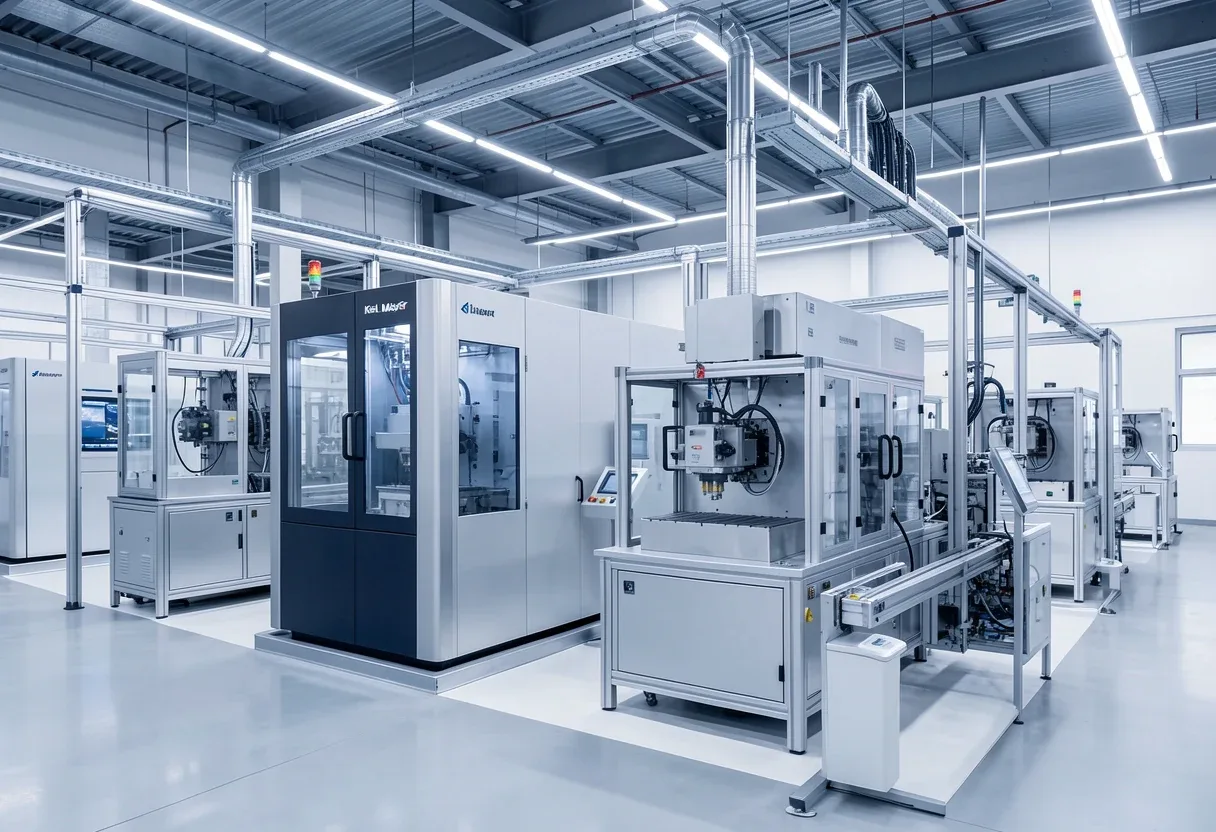
Karl Mayer will run a machine show at its Changzhou plant in China on 19–21 and 23 November 2026, timed to overlap with ITMA Asia + CITME 2026 in Shanghai, which runs 20–24 November. The German machinery builder plans several world premieres there, including two double-raschel machines aimed at knitted footwear materials.
The Changzhou programme sits alongside the company's formal exhibition stands in Shanghai: warp preparation technologies in Hall 3, Booth A24, and further warp knitting machinery in Hall 4.1, Booth C18. Visitors to Changzhou can watch the new machines running under production conditions and meet Karl Mayer specialists.
What premieres on the warp knitting side?
The headline tricot machine is the HKS 4-S EL in a 290-inch working width and E 36 gauge — the finest four-guide-bar machine in the company's portfolio. It targets fine fabrics with a premium handle for lingerie, sportswear and athleisure.
Karl Mayer will also run the Rascheltronic RJ 4/2 EL in E 32 gauge, which combines production efficiency with versatile patterning. The resulting fabrics, with a clean surface and cool touch, aim at functional lingerie and performance sportswear.
A third development is an upgraded TM Weft machine with weft insertion. It carries a finer gauge, an electronic pattern drive and intelligent yarn tension control, designed to raise fabric quality and widen applications in fashion textiles.
Which machines target footwear suppliers?
Two double-raschel machines make their public world premieres in Changzhou. The RDJ 7/3 carries three Jacquard bars, which enable larger, almost circular openings, differentiated functional zones, multicolour designs and three-dimensional surface effects.
The RDJ 6/2 in E 32 gauge produces fine spacer fabrics with a soft handle, smooth surfaces and a homogeneous appearance. Karl Mayer positions both machines as tools for knitted footwear materials, where design scope and functional zoning drive upper construction.
What does the composite machine offer wind-energy suppliers?
For technical textile producers, the company introduces a high-performance machine for biaxial non-crimp fabrics. Karl Mayer developed it with Asian manufacturers in mind, particularly those supplying the wind energy industry, and pairs high productivity with an intelligent control concept.
What happens at the Textile Innovation Center?
The company's Textile Innovation Center (TIC) will present fabric developments across roughly 480 square metres of exhibition space. The showcase covers woven-like knitted fabrics, athleisure, functional sports textiles, innovative shoe uppers and natural-fibre products, plus further work in fashion, lace, home textiles and technical applications.
Karl Mayer says the TIC helps manufacturers identify business opportunities by translating textile concepts into commercially viable products. Technical workshops and one-to-one consultations will address capacity increases, cost-effective small-batch manufacturing, product differentiation, production efficiency and more sustainable manufacturing processes.
For apparel, footwear and composite producers sourcing capital equipment in Asia, the Changzhou dates compress a decision loop: world-premiere machines, running production demonstrations and TIC consultations sit within a five-day window alongside the Shanghai fair.
via karlmayer.com (Original)
More from Grace Kim
Show full bio
Correspondent covering regulation, policy and their impact on Light industry and softgoods manufacturing at Softgoods Report.
298 articles