Footwear ManufacturingTKT-3B16
Rheom Adds Biobased Resin, Footwear-Grade Leather Substitute
Biobased materials firm Rheom has launched Benree resin for hard shoe components and Shorai Dura, a footwear-grade leather alternative tested with Bared Footwear on high heels.
- Cut
- October 10, 2026
- Sew
- 3 min
- Ticket
- TKT-3B16
Construction
Rheom Materials announced Benree resin and Shorai Dura on Oct. 1, expanding into footwear uppers and hard components.
Benree passed SATRA testing with Bared Footwear on high-heel applications, with performance comparable to ABS plastic.
Shorai Dura withstood up to 500,000 Bally Flex cycles and 70,000 Martindale abrasion revolutions in Rheom's internal testing.
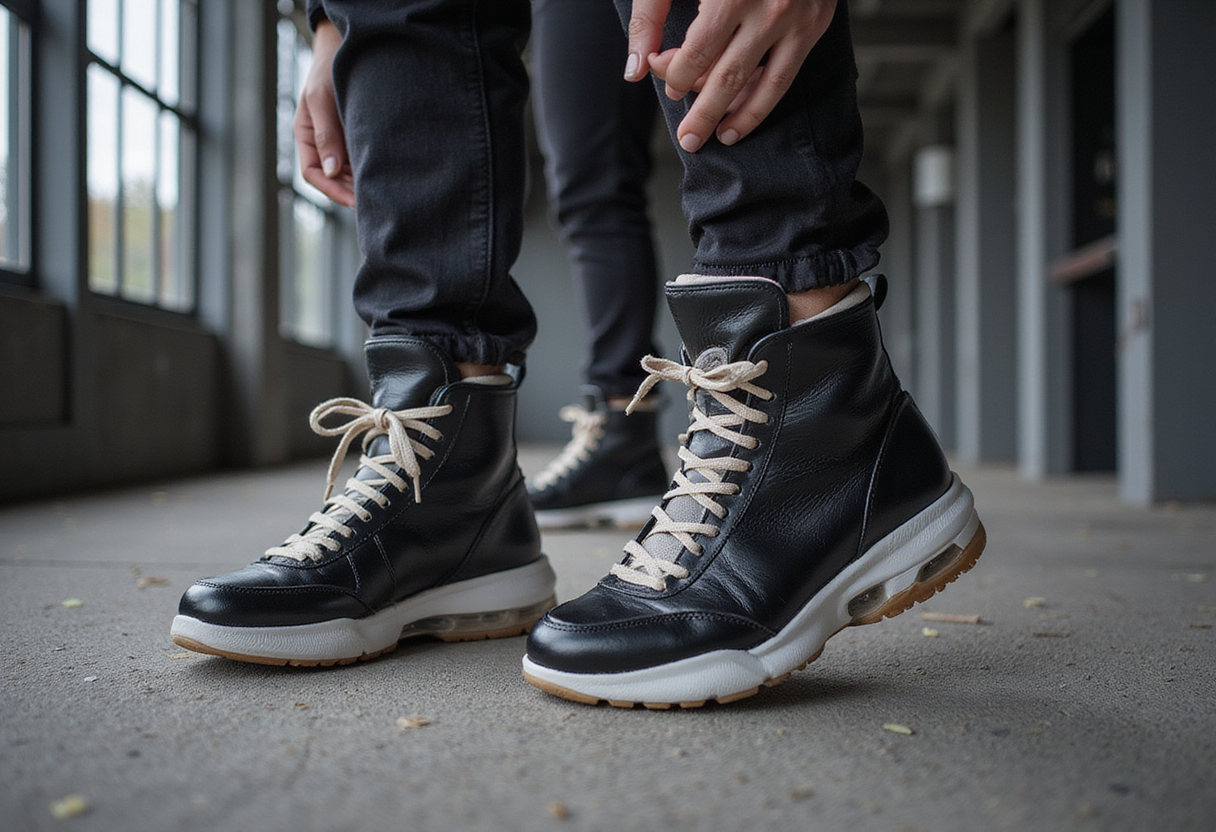
A Los Angeles-based manufacturer built two Shorai Dura prototypes: an athletic sneaker and a textured skater shoe.
Bared Footwear remains at the sampling and testing stage, with no production launch date announced.
Houston-based biomaterials firm Rheom Materials will move deeper into footwear with two biobased product launches announced Oct. 1: Benree resin for hard plastic components and Shorai Dura, a footwear-grade leather substitute tested with Australian brand Bared Footwear on high-heel applications.
The dual launch gives Rheom a way to pitch brands on replacing conventional inputs across multiple shoe tiers rather than swapping a single layer.
What does the launch cover?
Rheom's founder and CEO Zimri T. Hinshaw framed the rollout as a system play. "A shoe is not one material; it is multiple parts working together as a system. Substituting a single material has never moved the needle," Hinshaw said.
Benree targets injection-molded hard components. Rheom reports the resin passed SATRA testing in high-heel applications with Bared, with performance comparable to acrylonitrile butadiene styrene, or ABS plastic. The company also plans to test Benree in toe puffs and heel counters, two Tier-2 reinforcement parts that suppliers typically build from plastics, textiles or fibreboard.
Shorai Dura extends Rheom's existing leather alternative into footwear-grade specifications. Rheom reported the material withstood up to 500,000 Bally Flex cycles and 70,000 Martindale abrasion revolutions. The company also cited colorfastness, wet abrasion, tear propagation resistance and tensile strength testing, though it provided no numerical results for those measures in the release.
What supply-chain documentation is missing?
Rheom describes Benree as USDA Certified Biobased with 100 percent biobased content and biodegradable under home composting conditions. The Oct. 1 release did not specify the SATRA test methods used, nor the conditions or timeframe behind the home-composting claim.
Buyers validating Benree for marketing claims or retailer compliance checklists will need those test conditions on file before any purchase order moves forward. For Shorai Dura, the same documentation gap applies to the abrasion, tear and tensile claims that lack numerical thresholds.
What has Bared actually committed to?
Bared Footwear remains at the sampling and testing stage, not at production. The Australian brand's head of sustainability, Millie Richards, said: "From samples and testing, Rheom has proven to be solving both of those problems for us. We look forward to seeing how they develop as a company and would love to use them in our shoes."
No launch date accompanied the announcement, and Bared's involvement runs only to the high-heel testing described.
Who else is in the pipeline?
A Los Angeles-based footwear manufacturer produced two prototypes with Shorai Dura uppers: an athletic sneaker and a textured skater shoe. Rheom's broader Shorai range runs roll-to-roll and comes in various colors, textures, backings and thicknesses.
Rheom positions both materials to slot into existing manufacturing equipment. Benree works in standard injection molding. Shorai Dura covers flexible applications that traditionally use leather or polyurethane-coated synthetics.
The sourcing decision
Hinshaw, a longtime vegetarian, founded Rheom in his Temple University dorm room after seeking a material for bōsōzuku-style jackets inspired by his high school years in Japan.
For sourcing teams, the announcement amounts to a confirmed application test in Bared's high-heel line and two Los Angeles-built uppers to examine, but the absence of SATRA method codes and quantified sustainability thresholds places the verification burden on the buyer before any production commitment.
via Sourcing Journal (Source)
More from Olivia Hart
Show full bio
Senior reporter covering regulation, policy and their impact on Light industry and softgoods manufacturing at Softgoods Report.
227 articles