Apparel Manufacturing & SourcingTKT-18EA
Mobile Robotics Crosses Into Textile Manufacturing Operations
Engineering.com reports mobile robotics migration into textile manufacturing operations, framing a new capex front for mills and apparel producers weighing automation investment.
- Cut
- October 10, 2026
- Sew
- 3 min
- Ticket
- TKT-18EA
Construction
Engineering.com published the report on AGV and AMR migration into textile manufacturing floors
Coverage positions mobile robotics as a reconfigurable alternative to fixed conveyor systems in mills
ISO 3691-4 is the safety standard cited for buyer verification of driverless industrial trucks
Sourcing teams must request vendor identity, throughput delta, and integration proof before approving the capex
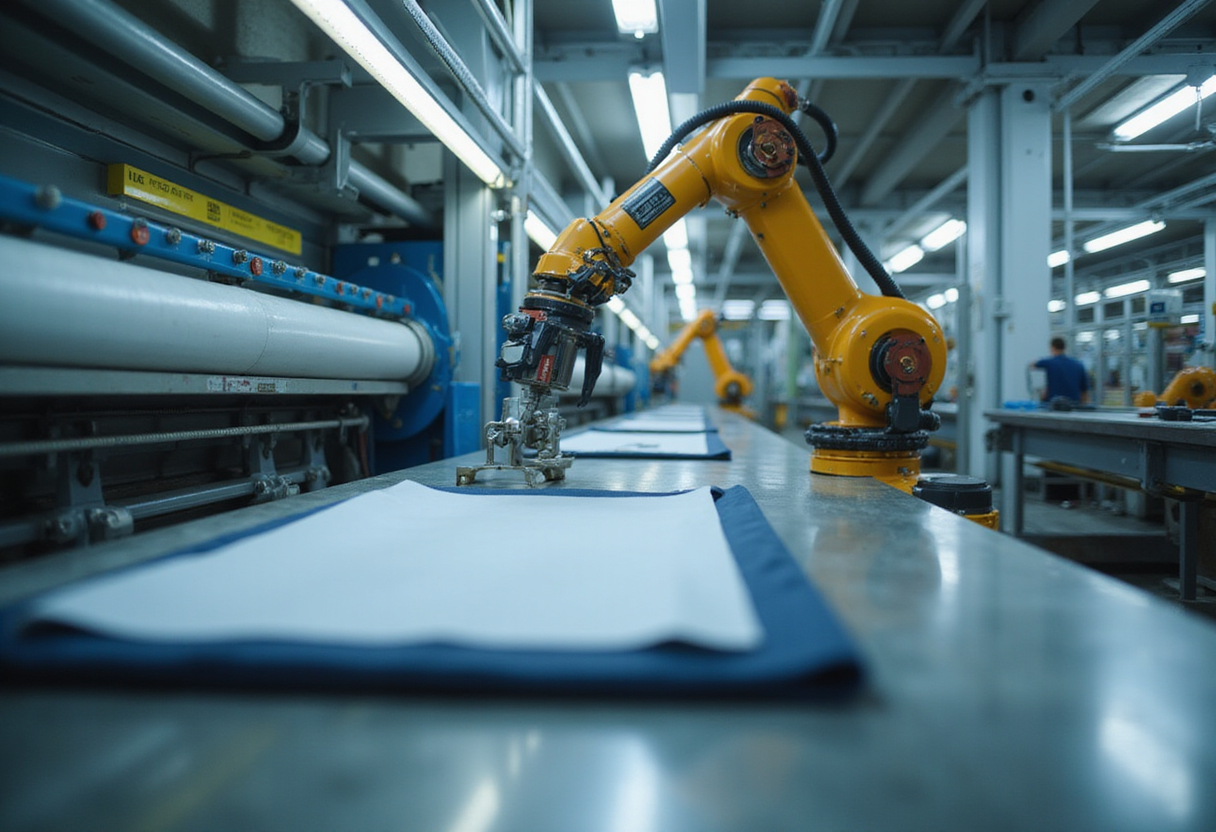
Mobile robotics technology has entered textile industry manufacturing operations, according to a report published by Engineering.com, marking a new capital equipment front for softgoods producers weighing factory automation investments.
Engineering.com's coverage tracks the migration of autonomous guided vehicles (AGVs) and autonomous mobile robots (AMRs) from automotive and electronics assembly lines onto textile manufacturing floors. The trade read for mills, cut-and-sew operators, and vertical apparel manufacturers is a reconfigurable material-handling layer replacing fixed conveyor infrastructure and manual trolley runs between spinning, weaving, dyeing, finishing, and shipping zones.
What changes on the factory floor
Three operational functions sit inside the news:
- Unit handling — moving bolt rolls, greige fabric, dyed lots, and finished garments between processing stations without fixed conveyor belts
- Inventory flow — connecting storage racks to cut rooms and shipping docks on programmable paths
- Quality loop return — sending rejected material back upstream without manual handling
Each function compresses the labour footprint per shift. Mills running multi-shift production on tight order books can redeploy material handlers to inspection, machine-tending, or quality control roles rather than transport runs.
Why the timing matters for sourcing
Apparel and home textile order books have moved toward shorter runs, more frequent replenishment, and country-of-origin diversification as brands tighten inventory exposure. That order profile punishes fixed conveyance systems, which carry high changeover cost when product mix shifts frequently. Mobile robotics offers route flexibility that aligns with the order book — a route change is software, not a conveyor rebuild.
For sourcing teams managing vendor matrices across multiple regions, the calculus is more nuanced. Lower headline labour cost in lower-wage sourcing regions narrows the labour-arbitrage case for robotics capex, but throughput consistency and order-fulfilment lead time now sit inside brand scorecards. AMRs that close the throughput gap against higher-wage competitors become a competitiveness item, not a cost-cutting item.
What buyers must verify before approving the capex
Sourcing managers auditing factory investment should treat mobile robotics deployment as a compliance item, not a marketing claim. The buyer-side verification list narrows to:
- Documented reduction in material-handling labour hours per unit shipped, signed by the factory manager
- Vendor identity for the robotics platform, with regional service support confirmed inside the sourcing country
- Safety certification to ISO 3691-4 for driverless industrial trucks
- Integration proof with the factory's existing warehouse management or manufacturing execution system
- Throughput delta before and after commissioning, available for buyer audit
Without those documents, "mobile robotics on the textile floor" remains a press release line, not a sourcing-grade capability.
What the report forces
For procurement teams, the Engineering.com report forces an update to the mill and factory audit questionnaire. Brand and retailer sourcing operations should add a specific enquiry on AMR/AGV deployment, vendor identity, throughput data, and safety certification to the next assessment cycle for existing and prospective mills. The decision is no longer whether to add the question — the decision is what minimum performance threshold the sourcing operation will accept before mobile robotics counts as an approved factory capability.
via Google News: Textile industry (Source)
More from Tom Whitfield
Show full bio
Staff writer covering companies, deals and strategy in Light industry and softgoods manufacturing at Softgoods Report.
258 articles